


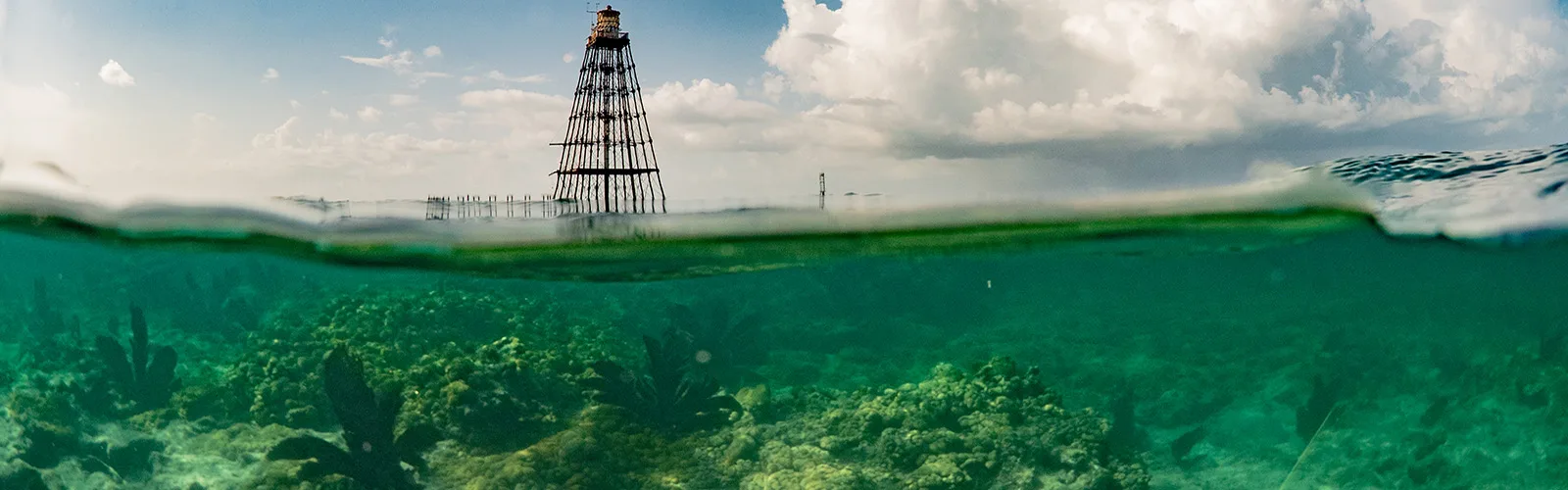


State of the Reef
Imagine drifting beneath the clear waters of the Florida Keys, where the green of the gulf meets the blue of sea, sunlight filtering down as through a stained-glass window shimmering over an undersea cathedral. A ballet of soft corals dance in the warm currents, small colorful fish dart through the branches of the elkhorn and staghorn corals, and young snapper and grouper peek out from the safety of the reef as if guarding treasure. It’s alive and vibrant, full of color— like a living city beneath the sea.
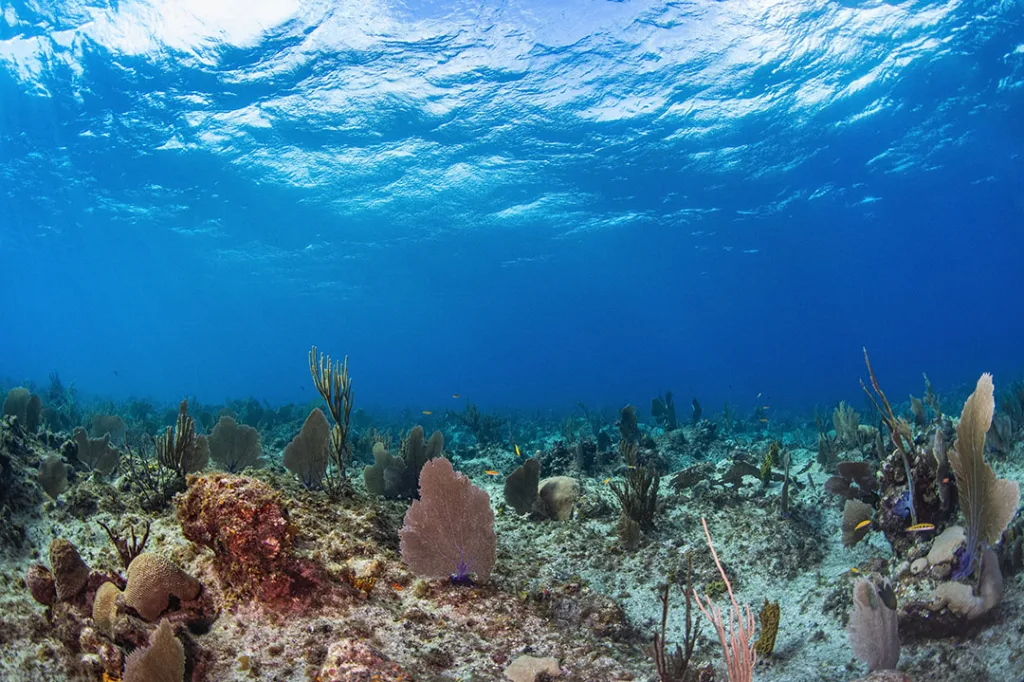
Now imagine the streets of this city are dusty, the colors are dull, the coral “buildings” are mere skeletal shells. What was once as bustling and bright as Fantasy Fest on Duval Street, now feels more like a post-apocalyptic ghost town. Such is the state of the reefs in the Florida Keys. The reefs aren’t gone — not yet, but we must pay attention and begin to change course, or these magnificent cathedrals will collapse.
Reefs of the Florida Keys
Long before boats traced white lines across the water and charts gave names to shoals and channels, the reefs off Key West were already hard at work. They began forming thousands of years ago. Rising seas crept over the Florida platform after the last ice age, flooding limestone ridges and giving life a foothold. What followed was not a sudden creation, but a patient one, layer upon layer, year after year, until the reef became a place rather than just a process.
Despite their stony appearance, coral reefs are not rocks. They are living colonies of animals, tiny coral polyps no larger than a pencil eraser, working collectively over generations. Each polyp secretes a thin layer of calcium carbonate, adding its contribution to a growing skeleton. Inside their tissues live microscopic algae, partners in an ancient arrangement: the algae provide food through photosynthesis, and the coral provides shelter. All three intertwine so completely that the reef becomes something harder to classify than stone or flesh alone. They are plant, animal, and mineral—all at once.
Growth on a reef is slow, measured in millimeters and centimeters rather than miles. Massive corals, the boulders of the reef world, may add less than a centimeter each year. Branching corals grow faster, sometimes several centimeters annually, reaching upward and outward like underwater thickets. Every ridge, ledge, and crevice is the accumulated work of countless small lives over eons. So, the structures we glide over in minutes—took centuries to build.
For the Florida Keys, these reefs are more than scenery. They are nurseries where young fish find shelter before venturing into open water as adults. They support fisheries that have fed coastal communities for generations and fuel a dive and sport fishing economy that is worth billions and draws people from around the world. When storms arrive, reefs blunt the force of waves, breaking them offshore before they can tear at the islands themselves. They even shape the water: its clarity, its color, the way light moves through it.
In the 1970s and early 1980s, much of the Florida reef tract was dense with living coral. Surveys from that period recorded live coral covering roughly 60% of the seafloor on many reefs, with the foundational reef-building species being common and abundant. I’m not bringing this up for the sake of nostalgia. It is a reference point, a baseline. A way of remembering what normal once looked like, and how much quiet work the reef had already done before most people ever thought to pay attention.
The Gradual Decline
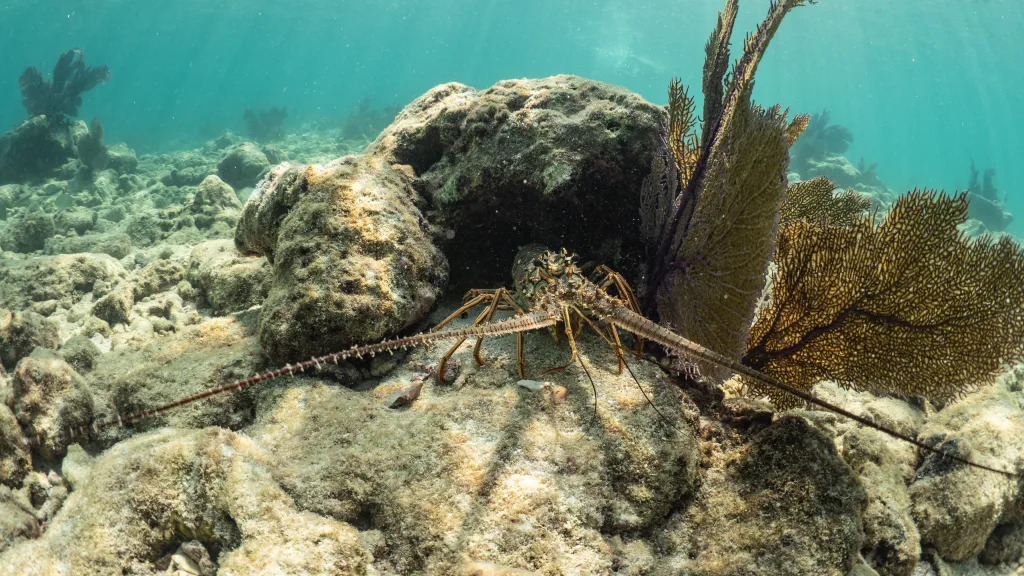
The degradations didn’t arrive all at once, and that may be why they were easy to miss. The reefs didn’t vanish overnight or collapse in some dramatic underwater moment. They began to thin. Colors faded. Familiar shapes became less common. What had once been crowded grew quieter, and this shift happened slowly enough that each year felt close enough to the last, such that from year to year changes are often imperceptible and immaterial to the organism’s massive scale.
One of the earliest pressures came from warming water. Corals are tuned to a narrow temperature range, and when summer water lingers just a degree or two above that comfort zone, stress begins to show. During prolonged heat waves, those long, glassy summers when the ocean feels more like bathwater, corals expel the algae that feed them. The result is bleaching: corals turn pale, sometimes stark white, not dead, but struggling.
Water quality plays a quieter but equally important role. Reefs evolved in clear, nutrient-poor water, and they do best when conditions stay that way. Runoff from developed land carries fertilizer, sediment, and pollutants into nearshore waters, clouding the reef’s world and tipping the balance toward algae growth. Aging sewage infrastructure and boat discharge add to the mix, as does the constant churn of cruise ship traffic. It’s a bit like showing up for a swim only to find the neighborhood pool murky and overtreated—it’s still water but no longer inviting for many natural organisms. Light fades, algae blooms, and corals are left competing in conditions they were never built for and that happened faster than the coral could evolve to withstand.
Disease followed stress, as it often does. Over the past few decades, coral reefs in the Florida Keys have faced outbreaks of black band disease, white band disease, and more recently stony coral tissue loss disease. These illnesses move through reefs the way a bad flu season moves through a tourist town, hitting hardest where organisms are already weakened. Large, slow growing corals, the very ones that built the reef’s backbone, proved especially vulnerable and many never recovered.
Then there is human traffic. The Florida Keys are a popular destination, and reefs are one of the main reasons people choose to visit. Boats, anchors, fins, sunscreen, and sheer numbers leave their mark. An anchor dropped a few feet off target can crush decades of growth in seconds. A careless kick of a fin can snap fragile branches. Even well meaning visitors sometimes love the reef a little too hard, unaware of how easily these living structures can be damaged.
But none of these forces acted alone. Together, over time, they reshaped the reef—subtly at first, then more noticeably. Not a single cause, not a single moment, a death of a thousand cuts, a gradual accumulation of stress that changed the character of an organism and place that had taken centuries to form.
A Wider View
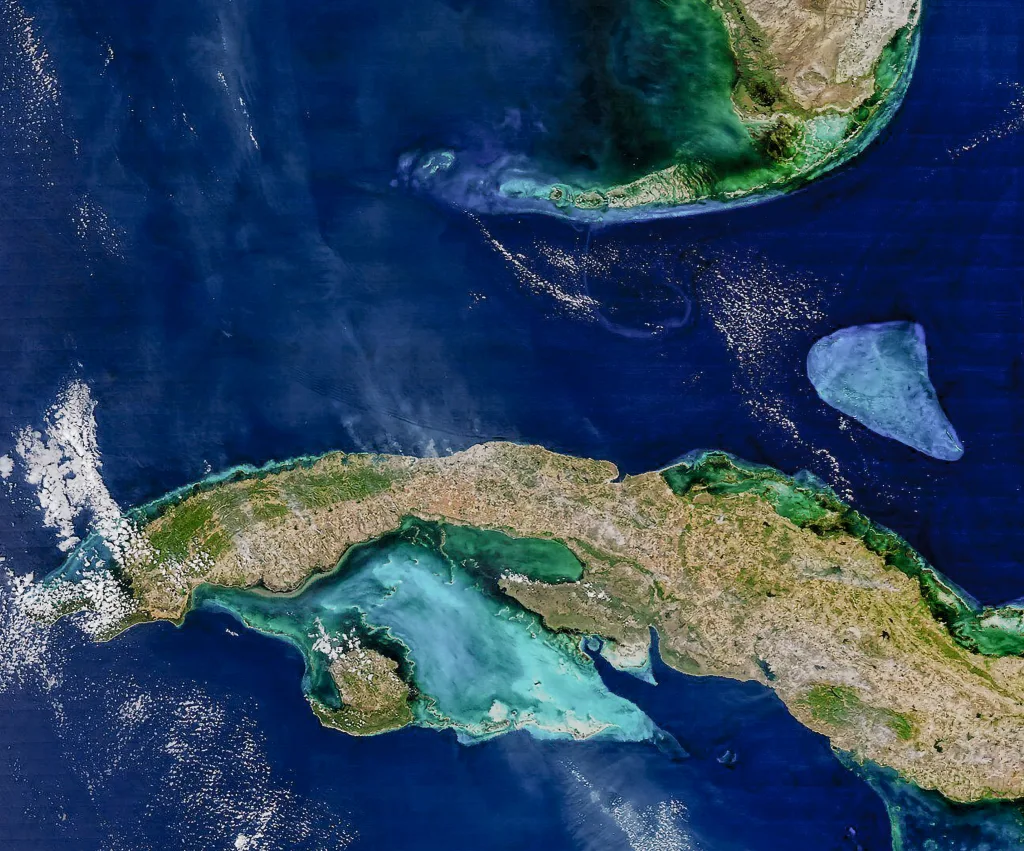
Step back from the Florida Keys and the picture becomes more nuanced. Across the Caribbean–from Belize’s barrier reef, the second largest in the world, to the remote banks off Cuba–reefs have faced many of the same broad pressures: warmer water, stronger heat waves, disease, and changing chemistry. In that sense, the challenges are shared. No reef exists in isolation anymore, and heat stress does not stop at national borders.
But the rate and texture of decline are not uniform. Reefs in places like Belize and parts of Cuba often sit farther from dense coastal development and these reefs benefit from clearer water and fewer chronic local stressors. While they experience bleaching events and disease outbreaks similar to those in Florida, many have retained higher coral cover and structural complexity, particularly in areas with limited fishing pressure and stronger protections. The difference is not immunity—it is breathing room. Fewer daily insults give these reefs more time to recover between major disturbances.
The Florida Keys, by contrast, sit downstream of a very busy neighborhood. They are narrow, heavily toured, and closely tied to land based runoff, boat traffic, and coastal infrastructure. As a result, stressors stack more tightly here. Heat waves arrive on top of water quality issues, which arrive on top of physical damage, which arrive on top of disease. The cumulative effect has pushed many Keys reefs further and faster along the curve of decline than many of their Caribbean counterparts.
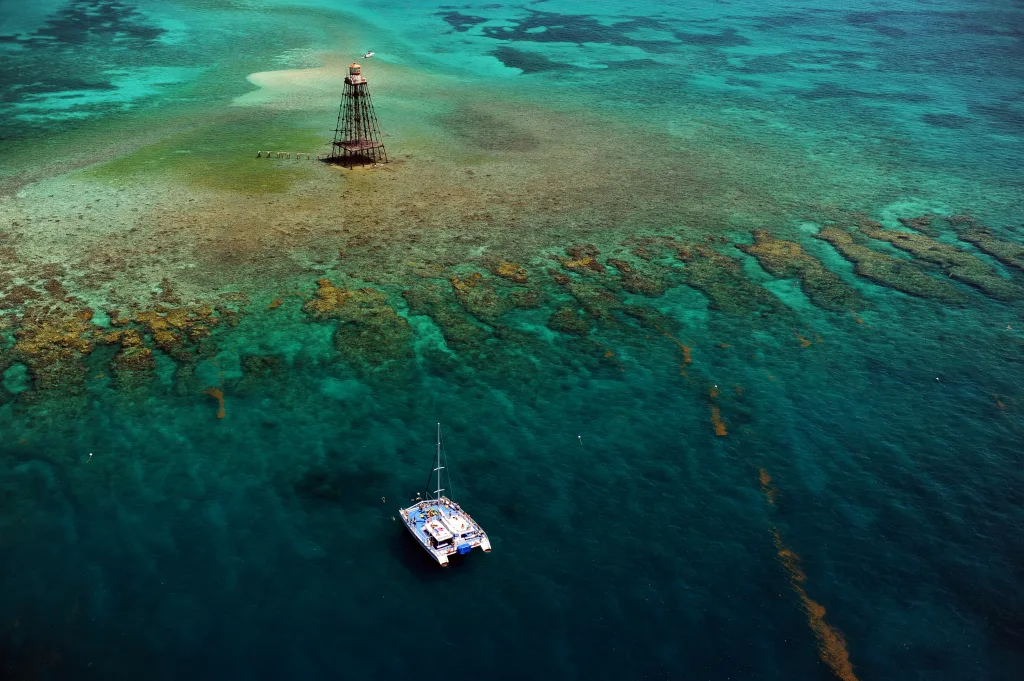
Even within the Florida Keys, different reefs tell different stories. Sand Key, just off Key West, lies close to shore and close to traffic, boats, divers, runoff, and shifting sediment. Sand Key reef has absorbed decades of pressure and shows it in reduced coral cover and simplified structure. It is not lifeless, but it is heavily worn.
Further west, Dry Tortugas National Park feels like another world. More remote, less visited, and surrounded by clearer water, its reefs have generally fared better. Coral cover has remained higher, and the reef framework more intact, though it too has not escaped bleaching or disease. The difference again is not absence of stress, but less accumulation of it, and far less human encroachment.

Moving east through the Upper and Middle Keys, conditions vary reef by reef. Offshore reefs tend to be healthier than nearshore reefs, and protected areas outperform heavily used sites. Geography, water flow, and human proximity matter—sometimes as much as temperature itself.
Taken together, the comparison reveals an important truth: the story of reef decline is not a single story. It is shaped by place, pressure, and proximity, and the differences between reefs are often clues—not only to what has gone wrong, but important clues as to what we can do to protect and promote healthy reef expansion.
Protecting & Growing Reefs
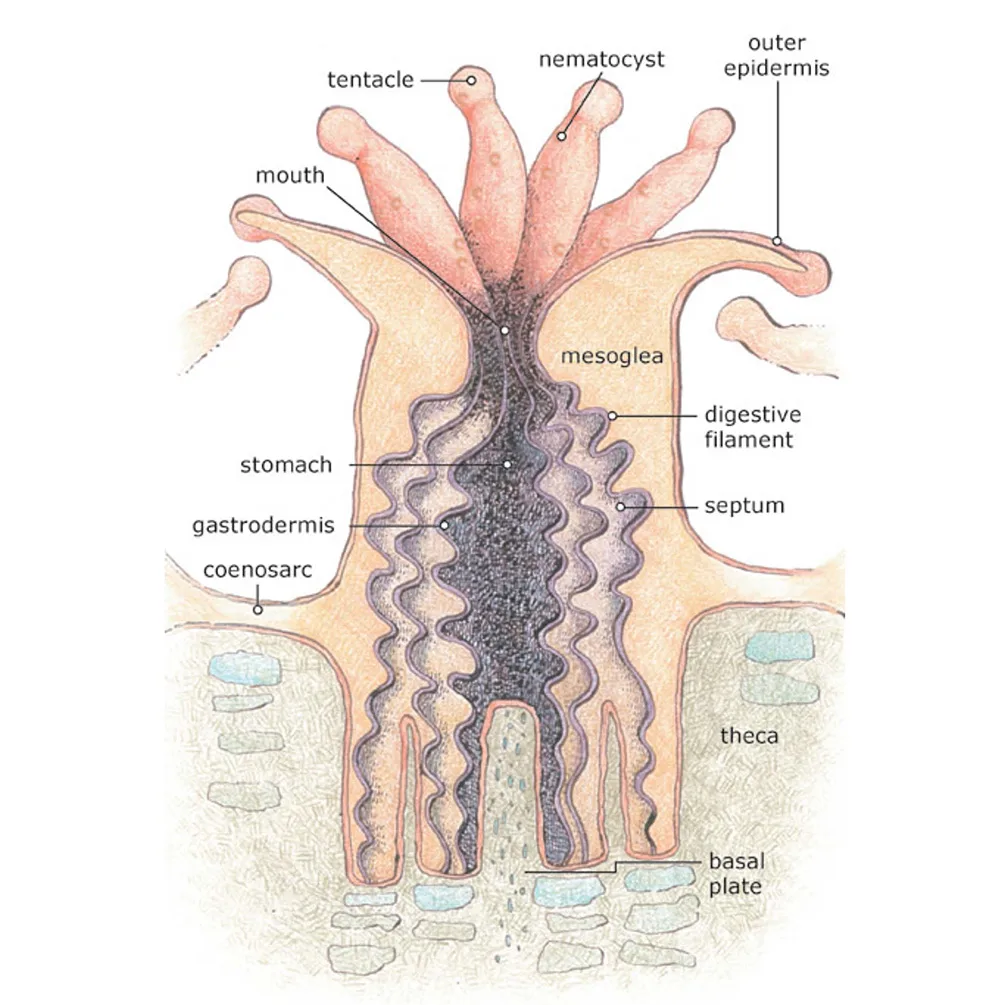
One of the clearest signs of the reef’s resilience comes from the active restoration efforts underway throughout the Keys. Coral nurseries and programs like iCare and MOTE Marine Laboratory grow fragments of hardy species in both ocean and land-based systems, propagating corals that have shown greater tolerance to heat or disease. These corals are then carefully outplanted where they can grow, reproduce, and gradually rebuild lost structure. At the same time, research has become more targeted and adaptive: scientists are learning which species, genotypes, and locations perform best under modern conditions, and how local stress reduction, better water quality, smarter management, and fewer physical impacts, can give both lab grown and wild corals a fighting chance. The goal has shifted from recreating a perfect past to supporting a reef that can function today and persist into the future. It is slow work, but so was the original reef.
What matters now is trajectory. The coming decade will shape what the Florida Reef Tract becomes. Continued warming and unchecked local stressors could further erode what remains. But improved management, sustained restoration, and thoughtful human behavior can stabilize and, in some places, reverse losses. Reefs do not need perfection to survive. They need margins—windows of time without being pushed past their limits.
And that raises the next question: if the reefs are still here, and still responding, what can locals and visiting guests do to help tip the balance in the right direction?
You Can Help
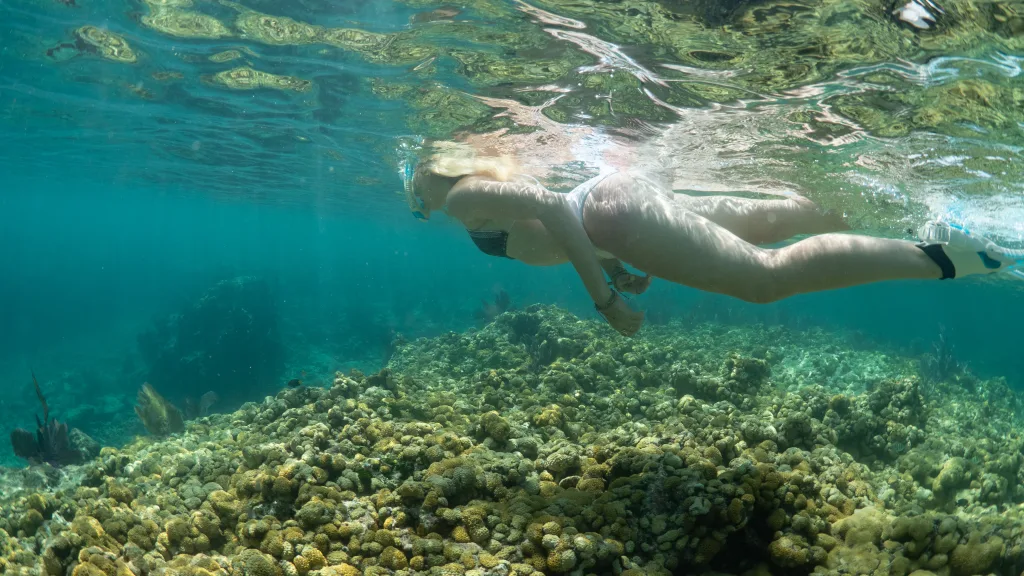
Helping the reefs doesn’t require grand gestures or expert knowledge. Most of what makes a difference comes down to attention to how we move through the water, how we live on land, and choosing not to support businesses that harm the reef.
On the reef itself, the rules are simple. Look, don’t touch. Corals are living animals, and standing on them or brushing past with a fin can cause damage that takes years to repair. Good buoyancy, slow movements, and awareness go a long way. Sun protection matters too. Reef-safe sunscreen, or better yet long-sleeved rash guards, reduces the introduction of harmful chemicals into the water. Choosing eco-certified dive, snorkel, and fishing operators helps reinforce best practices and rewards businesses that prioritize reef health over lazy profits.
What happens on land matters just as much as what happens offshore. Fertilizers, pesticides, and household chemicals don’t disappear once they leave the yard or driveway—many eventually make their way into our nearshore water. Using less, choosing alternatives, and applying only what’s necessary helps keep coastal waters clearer and more balanced. Reducing plastic use, especially single-use items, cuts down on debris that can end up tangled in reef structures or being ingested by marine life. Proper waste disposal, water conservation, and mindful energy use all reduce the background pressure reefs face every day.
Coral restoration programs rely on funding, volunteers, and public awareness to keep growing. Donating to or volunteering with reef organizations helps expand nurseries, outplant corals, and monitor progress. Reef cleanups, whether underwater or along shorelines, remove hazards and reconnect people to the places they’re trying to protect. Advocacy matters too. Responsible tourism helps shape long term outcomes beyond any single visit.
None of these actions fix everything on their own. But, together they create space. Space for corals to recover between heat waves, space for fish populations to rebuild, space for restoration efforts to take hold.
If we get it right, the future of Key West doesn’t look like a return to some untouched past. It looks like a working reef: coral heads rebuilding structure, fish moving in dense schools, clear water breaking over living ridges instead of bare rock. It looks like divers hovering instead of standing, boats anchoring carefully or not at all, and communities that understand the reef not as scenery, but as infrastructure—alive, valuable, and worth protecting.
The reefs don’t need saving in a single heroic moment. They need enough people to care, consistently, and use just enough restraint to let centuries of quiet work continue.
The Future
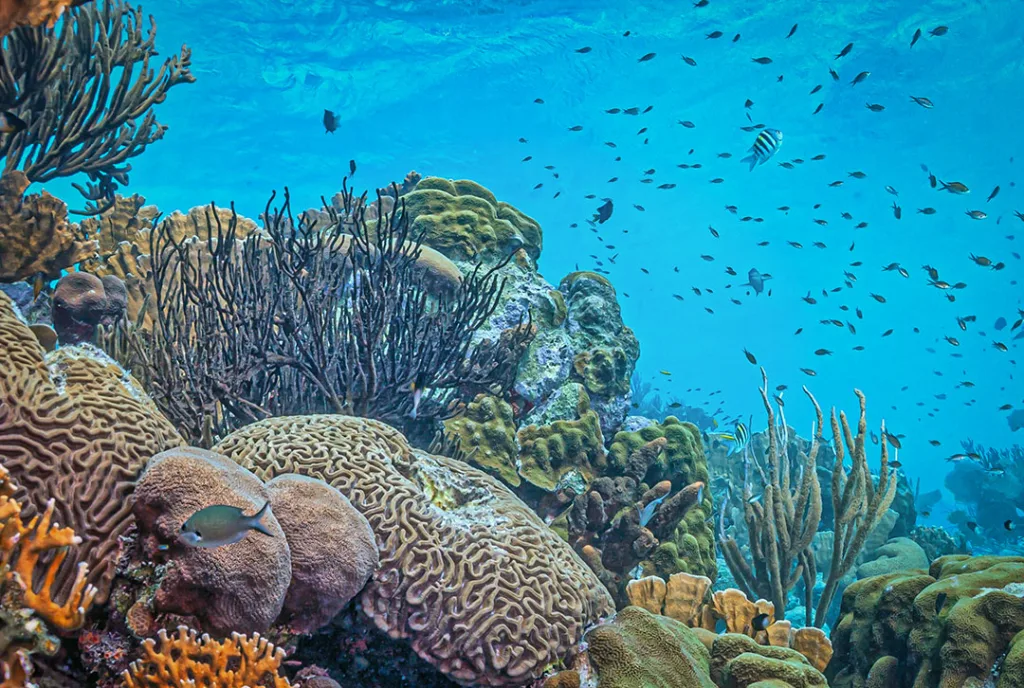
One day someone will drift over these reefs again and see more color than bone, more movement than stillness. They may not know the full history of what was lost or how close the system once came to unraveling—and that’s fine. The reef does not require credit. It only requires the chance to continue its quiet work.
The ocean has given the Florida Keys its identity, its livelihood, and its beauty. What happens next is not only a question of science or policy, but of choice.
As oceanographer Sylvia Earle reminds us, “With every drop of water you drink, every breath you take, you’re connected to the sea. No matter where on earth you live.”
Recognize this connection, and choose the best outcomes. – OKW

- State of the Reef - July 25, 2026
- Tall Ships And Their Masters - November 15, 2025
- In Defense of Rum - August 22, 2024

 Cheeseburger in Paradise 1986
 Learning to Swim at the Chart Room
 Tall Ships And Their Masters
 What’s Your Intention?
Let's Connect!


